

Recently, high school educators took part in a professional development workshop from Penn State Researchers focused on the intriguing world of neutron stars—extreme remnants of massive stars formed after supernovae. These dense objects contain more mass than our Sun, compressed into a sphere less than 10 miles in radius.
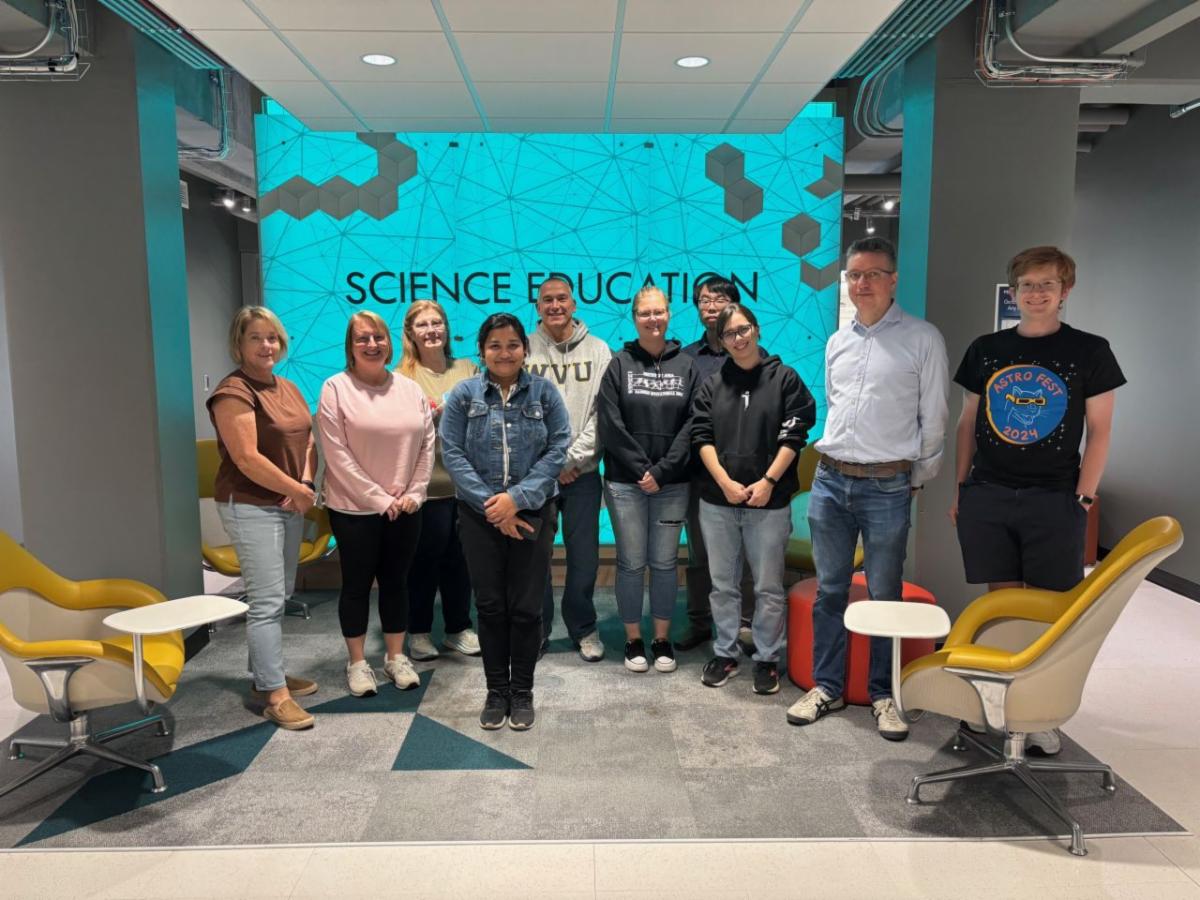
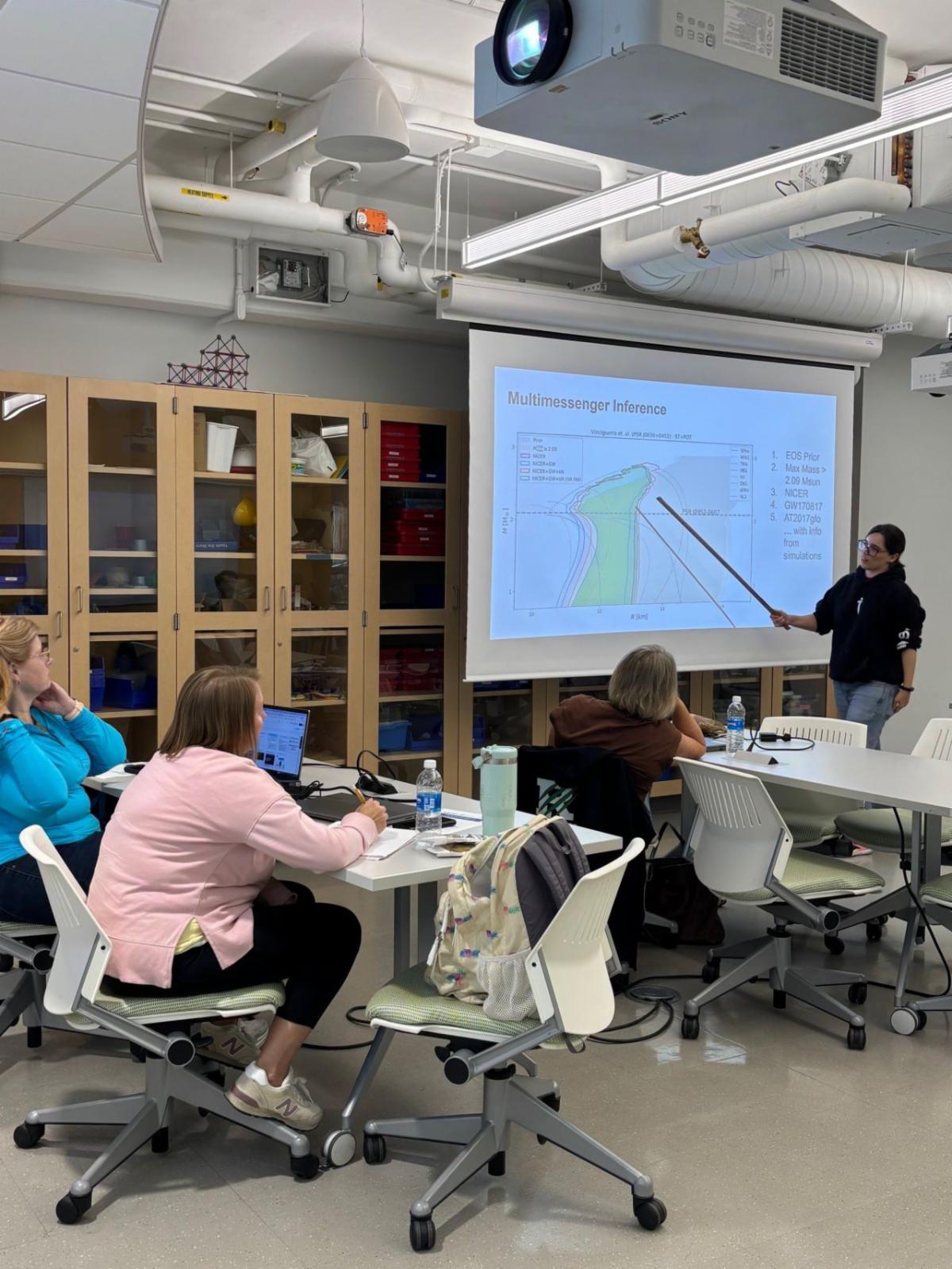
Recently, high school educators took part in a professional development workshop from Penn State Researchers focused on the intriguing world of neutron stars—extreme remnants of massive stars formed after supernovae. These dense objects contain more mass than our Sun, compressed into a sphere less than 10 miles in radius. When neutron stars collide, they produce conditions more extreme than those since the Big Bang, compressing matter to densities over one hundred trillion times that of solid iron and heating it to over one trillion degrees Kelvin. Observing these mergers enables scientists to study matter under conditions impossible to replicate on Earth.
During the workshop, teachers engaged with online modules and multimedia resources, interacting with Penn State researchers to gain tools for introducing astrophysics into their classrooms. The hybrid format featured 10 hours of asynchronous learning and a one-day in-person meeting. Participants explored the connection between dense matter theory and the macroscopic properties of neutron stars, as well as how these can be investigated through gravitational waves and electromagnetic observations. By the end, teachers were well-equipped with resources to create engaging units on neutron stars. Teachers received both a stipend and Act 48 credits for participating. Want to learn more about neutron stars? Click HERE